Valentine's Day History

February 8th, 2023

Valentine’s Day is best known as a celebration of love in all its forms. Pink hearts, red roses, and cute greeting cards adorn every surface you see. What many people don’t realize is that the modern Valentine’s Day celebration arose from a religious holiday.

St. Valentine’s Day was originally celebrated as a religious feast day in honor of early Christian martyrs. Three martyrs named Valentine were honored: a priest in Rome, the persecuted bishop of Interamna (a town in central Italy), and a saint martyred in Africa. This saint’s day was celebrated throughout Christendom, although it was removed from the Roman Catholic Calendar of Saints in 1969.

The origin of Valentine’s Day as a holiday for lovers began with Geoffrey Chaucer in his 1382 poem “Parlement of Foules.” Chaucer wrote, “For this was on Saint Valentine’s Day, when every bird cometh there to choose his mate,” and the modern romantic holiday was born. William Shakespeare and other writers mentioned Valentine’s Day as a day of love.

Valentine’s Day as we know it came about in the early 19th century. In Victorian England, printers began manufacturing small numbers of cards with romantic verses, lace, ribbons, and other frills. Anonymous Valentine’s Day card were a popular way for young lovers to exchange romantic sentiments in an otherwise prudish time. As the 19th century progressed, printers began mass manufacturing Valentine’s Day cards. People in the United States give an estimated 190 million valentines every year, and up to one billion if you count children exchanging cards at school! With the rise of the Internet, Valentine’s Day e-cards have become a popular mode of communication, with millions of e-cards sent each year.

The other items associated with Valentine’s Day include chocolate and flowers. The tradition of giving chocolates has been around for decades, and Richard Cadbury created the first box of Valentine’s Day chocolates nearly 150 years ago. Today, purchases of chocolate total over $1 billion in the United States alone, with 35 million heart-shaped boxes sold each year. Loved ones also exchange flowers, with red roses being associated with Aphrodite, the Greek goddess of love. On Valentine’s Day itself, florists sell nearly 200 million stems of roses.

Although many people dismiss Valentine’s Day as a commercialized “Hallmark holiday,” it is beloved to couples and romantics across the United States and other countries. The team at Pasternack Pediatric Dental wants to remind all patients that no matter what your celebratory plans, February 14th can be a wonderful day to celebrate the loved ones in your life. Happy Valentine’s Day!

The Importance of Oral Health Care for your Child

February 1st, 2023

February is National Children’s Dental Health Month, so it’s a great time for our team at Pasternack Pediatric Dental to talk about the importance of getting proper oral health care for your children. Oral health has been closely tied to the overall health of our entire body, so making sure that our children have the best oral health care can not only ensure that they have great smiles, but they are protected from the negative effects of poor oral health as well.

Special Care for Children’s Teeth

Oral health care should begin with the very first tooth that grows in your baby’s mouth. Even though these teeth will fall out within a few years, baby teeth hold a space for your child’s permanent ones, and it’s important that your child has a healthy mouth when those permanent teeth arrive. Without proper care, even baby teeth can decay and cause a host of problems, including:

  • Painful teeth and gums
  • Difficulty chewing, eating, and sleeping
  • Gum disease and inflammation
  • Embarrassment when talking and smiling

Develop Good Oral Health Habits Early

As a parent, you can teach your child the right way to care for teeth and make sure he or she visits Drs. Paul Pasternack, Chara Pasternack, and Christine Biondi regularly for cleanings and checkups. According to the U.S. Department of Health and Human Services, almost 50 percent of children under 12 have some form of tooth decay, and it is one of the most common childhood diseases. Alarmingly, a report by the National Institutes of Health, Oral Health in America, found that almost six out of ten children have cavities or other tooth decay (also called “caries”).

There are many things you can do to help your child maintain a healthy mouth with strong teeth and gums.

  • Brush your children’s teeth twice a day when they are babies, then teach them to do it on their own when they get older.
  • Be sure your child gets enough fluoride—you can find out whether it is already in your drinking water, and provide supplements if it is not. If you are unsure how to get more fluoride, give our office a call to discuss. In addition, make sure your child is brushing with fluoride toothpaste.
  • Feed your child a healthy diet, high in fruits and vegetables and low in added sugars. We especially recommend you avoid sugary drinks.
  • Bring your child to our Vorhees office for regular dental checkups and cleanings. Coming in every six months is recommended.

Helping children develop healthy habits to care for teeth while they are young is important. These habits can set the stage for good oral health care throughout their entire life. They can avoid many of the problems that result from poor oral health, including gum disease, cavities, and tooth decay. Start encouraging those habits now during National Children’s Dental Health Month, and help your children reap the benefits through the rest of their lives.

Dental Emergencies while Traveling

January 25th, 2023

You’ve planned your dream vacation. Your reservations are made. You’re packed and ready. You’ve even scheduled a dental checkup at our Vorhees office to make sure you catch any potential problems, have finished any major work, and have an up-to-date chart.

But things don’t always go according to even the best of plans. So, what to do if you find you have a dental emergency while traveling? Drs. Paul Pasternack, Chara Pasternack, and Christine Biondi and our team have some recommendations for problems that might arise.

  • Toothache—Rinse your mouth with warm water and use dental floss to remove any food particles. Never put aspirin directly on a tooth or gum tissue. If the pain persists, call a dentist.
  • Cracked or broken tooth—Immediately rinse with warm water to clean the area and apply cold compresses to the face to minimize swelling. Get in touch with a dentist.
  • If you lose a tooth—Keep the tooth moist at all times. Put the tooth back in the socket without touching the root if possible. If that is not an option, place the tooth between the cheek and gums or in milk. See a dentist as soon as possible.

Know where to get help if you need it! If you are traveling in the United States, the American Dental Association offers Find-a-Dentist, a website that can locate a member dentist closest to you. If you are traveling to another country, there are steps you can take to prepare for an emergency.

  • If you are out of the country and need to locate a dentist, your local embassy or consulate, your hotel concierge, or friends abroad can be a useful resource.
  • Before you go, check your insurance to see if you are covered while traveling.
  • If you have travel insurance, find out if it covers dental treatment and can provide information on qualified local dentists and translation help, if necessary.
  • Good dental care is available in many areas internationally, but it is important to know what standards are present in the countries you plan to visit. The Organization for Safety and Asepsis Procedures offers a checklist for safe treatment in their “Traveler’s Guide to Safe Dental Care.”

If you have any questions, Drs. Paul Pasternack, Chara Pasternack, and Christine Biondi and our team are happy to do all we can to answer them. While it’s unlikely that problems will arise, we are always available if you need to contact our Vorhees office. Bon voyage, and we look forward to hearing about your trip!

When should I begin brushing my baby's teeth?

January 18th, 2023

One question our team at Pasternack Pediatric Dental hear all the time is, “When should I start brushing my baby’s teeth?”

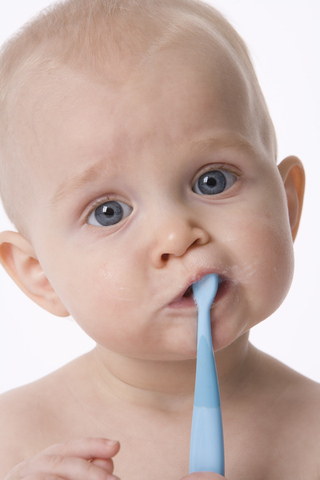
You should begin regular cleanings even before your baby has teeth. After each breast feeding (or bottle-feeding) use a clean, damp washcloth to gently rub your baby’s gum tissue. You may wrap the material around one finger to make it easier to remove any food bits from your baby’s mouth.

When your baby’s first tooth comes in, switch to a baby toothbrush. Look for special baby toothbrushes in your drugstore; they have just a few bristles and are very soft. There are even brushes shaped like finger puppets that fit over the tip of your pointer finger! All you need at this point is water (no toothpaste yet).

After a few more teeth appear, you may start using toothpaste, but you only need a tiny bit, and make sure it doesn’t contain fluoride for the first two years. From the beginning, have your little one practice spitting the toothpaste out after brushing. That way, he or she will already have the good habit of spitting when you switch to fluoride toothpaste, which should never be swallowed.

If you have any questions about caring for your baby’s teeth, or to schedule an appointment at our convenient Vorhees office, please contact Pasternack Pediatric Dental.